Role:
Product Designer
Timeline:
June 12, 2025 - July 23, 2025
Platform:
Mobile App (Healthcare)
Focus Areas:
User Onboarding, UX Copywriting, Product Thinking, Prototyping
Context:
August is an AI-powered healthcare assistant app that helps users manage nutrition, reports, and general wellness.
I discovered their onboarding while researching healthcare UX patterns, and saw an opportunity to redesign it to a more human-centered perspective.
Table of Contents
Onboarding in healthcare apps often fails to build early trust or reduce user anxiety. Users are greeted with abrupt personal data requests, overwhelming options, and buried privacy cues, leaving them confused and hesitant.
As a result, many either abandon the process or feel detached from the experience, missing out on the supportive entry they expect from a health app.
THE CHALLENGE
How might August AI help first-time users feel safe, understood, and motivated, especially before they’re asked for sensitive information?
The goal is to create an onboarding journey where every user (no matter their background) experiences emotional reassurance, clear guidance, and a sense of progress from the start.
Meet Kevin, a new user-
Kevin is 27, lives in Delhi, and manages early stage diabetes while working long hours. They’re trying August AI for the first time hoping for guidance, but anxious about privacy and not sure what to expect from another healthcare app.
User Psychological Journey — Original Onboarding
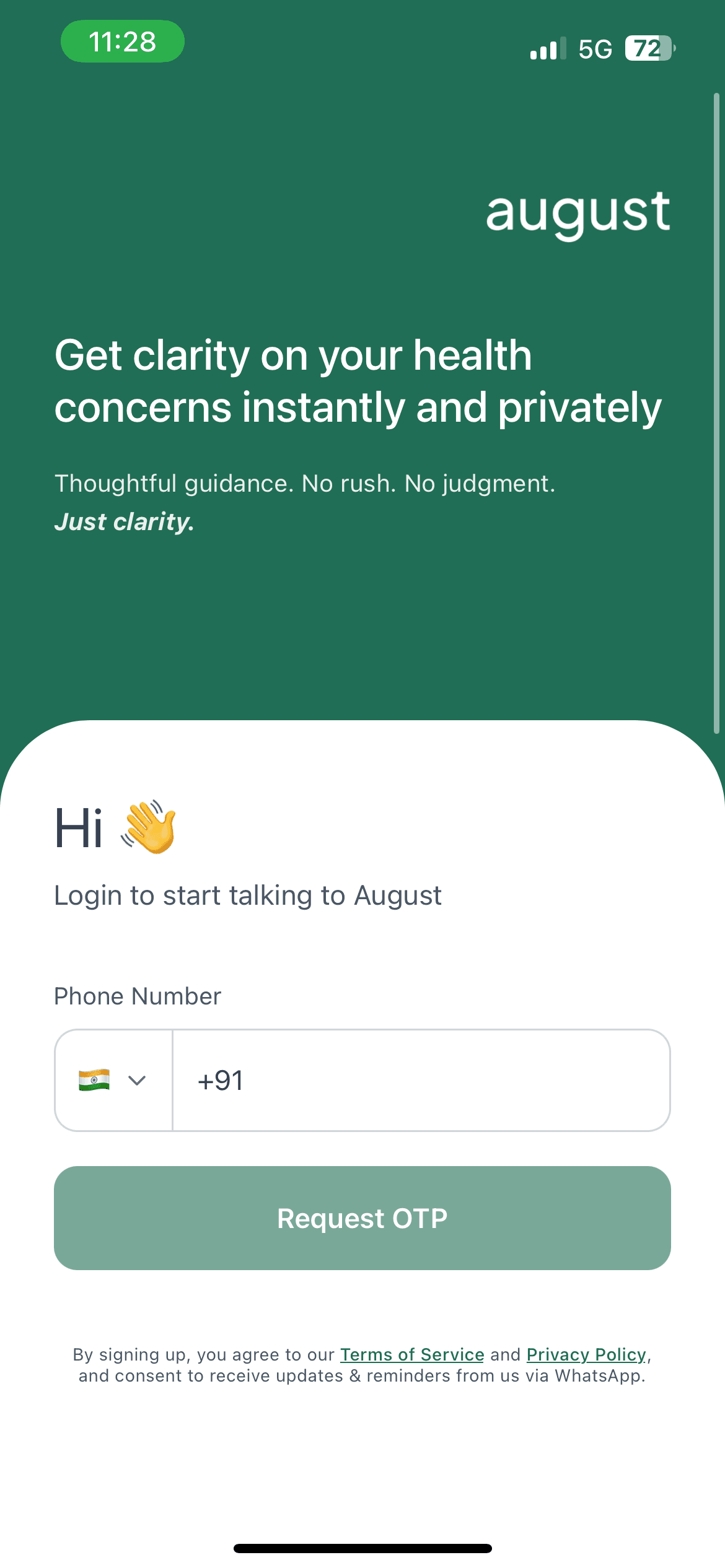
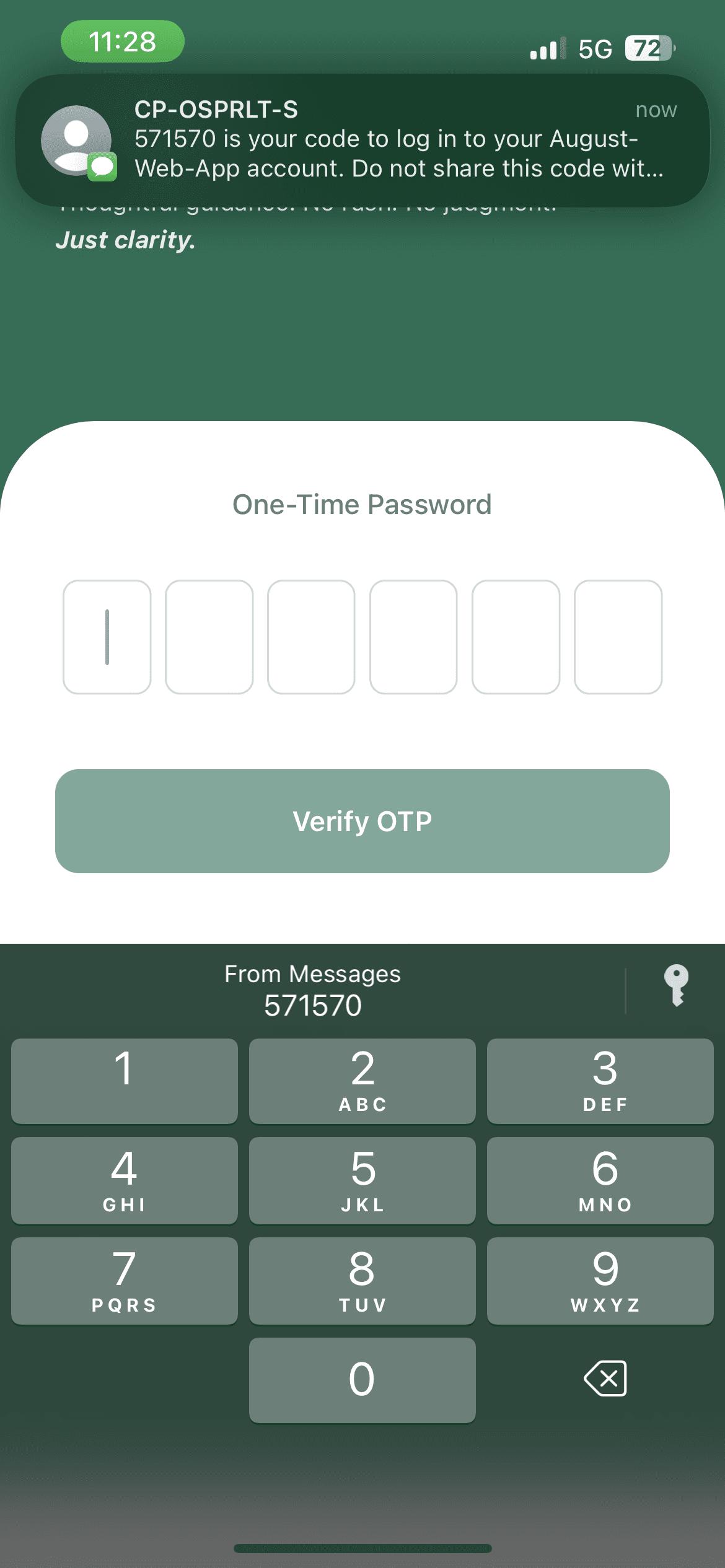
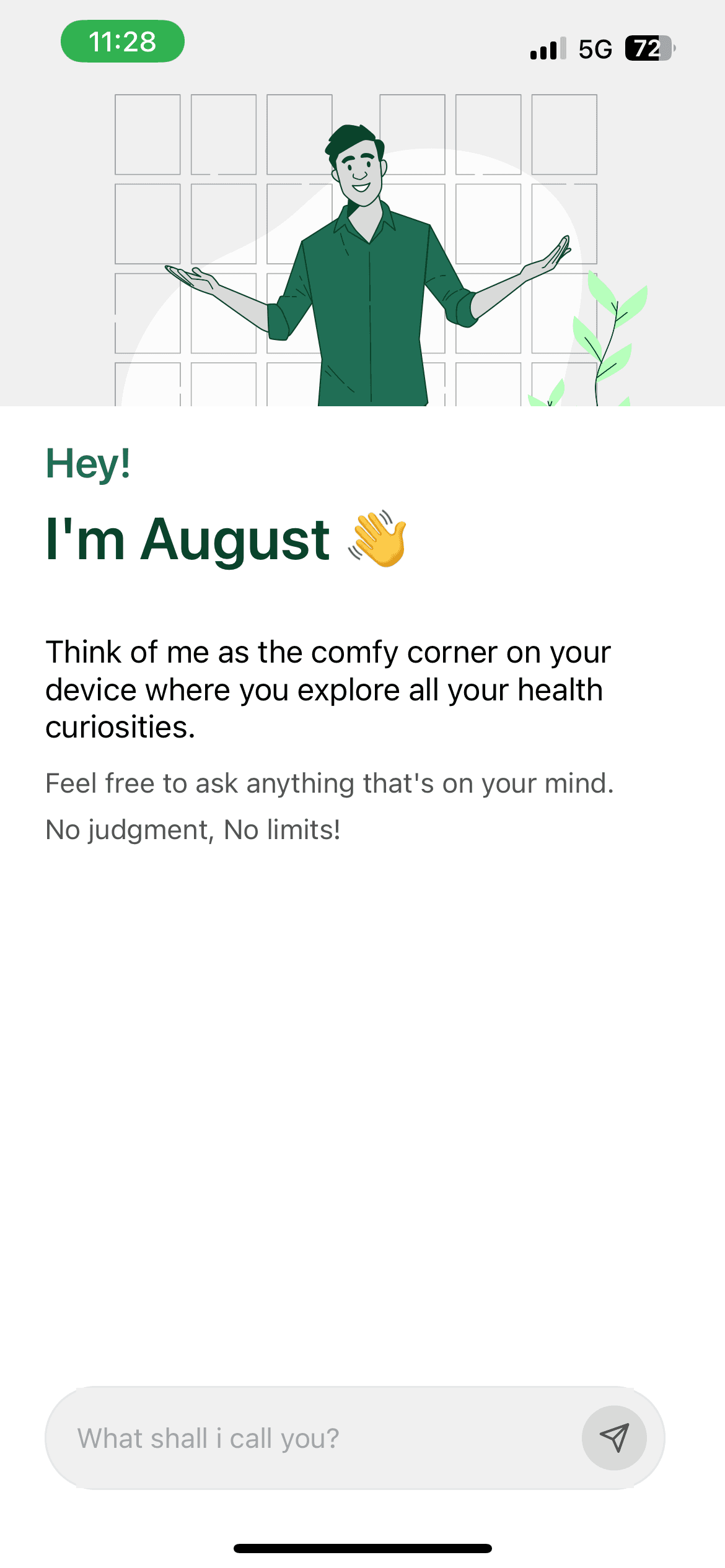
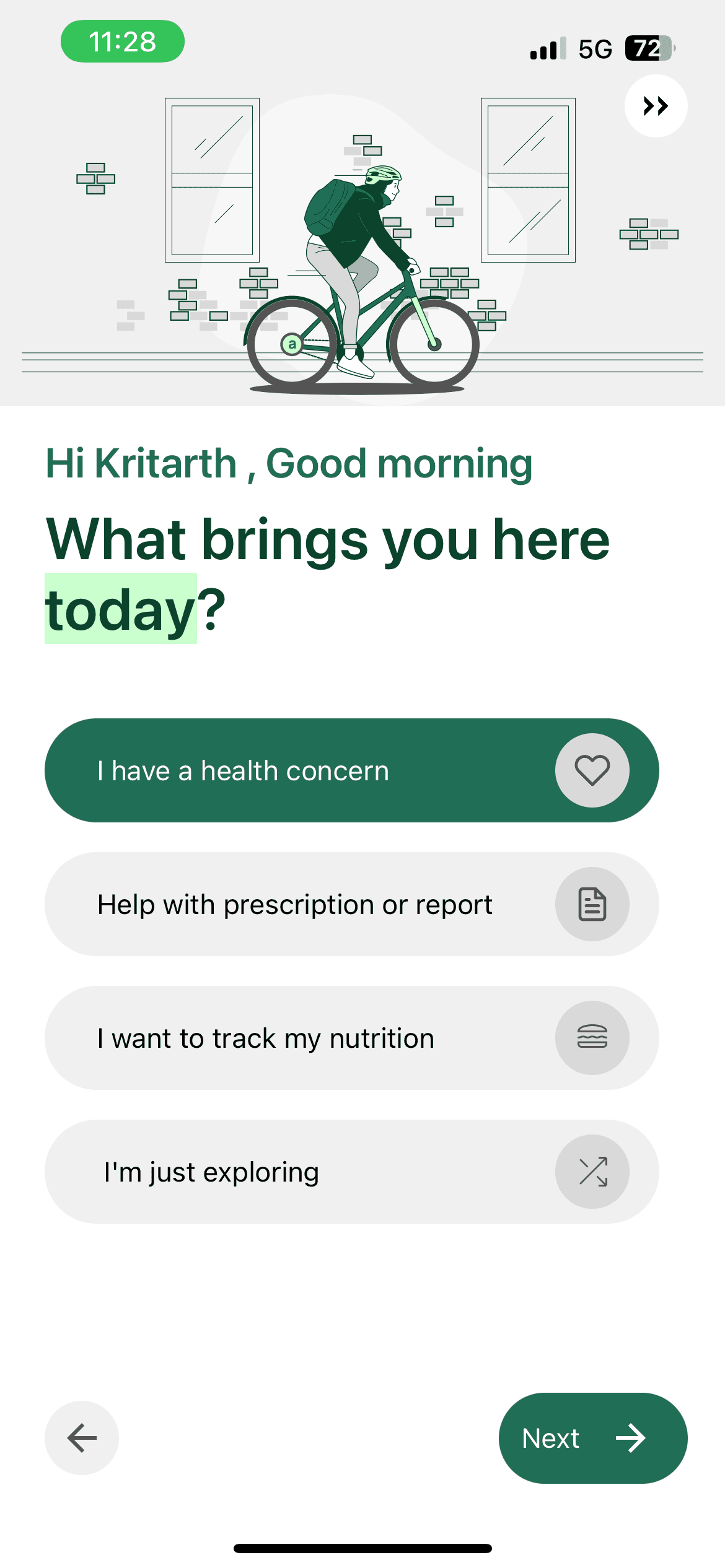
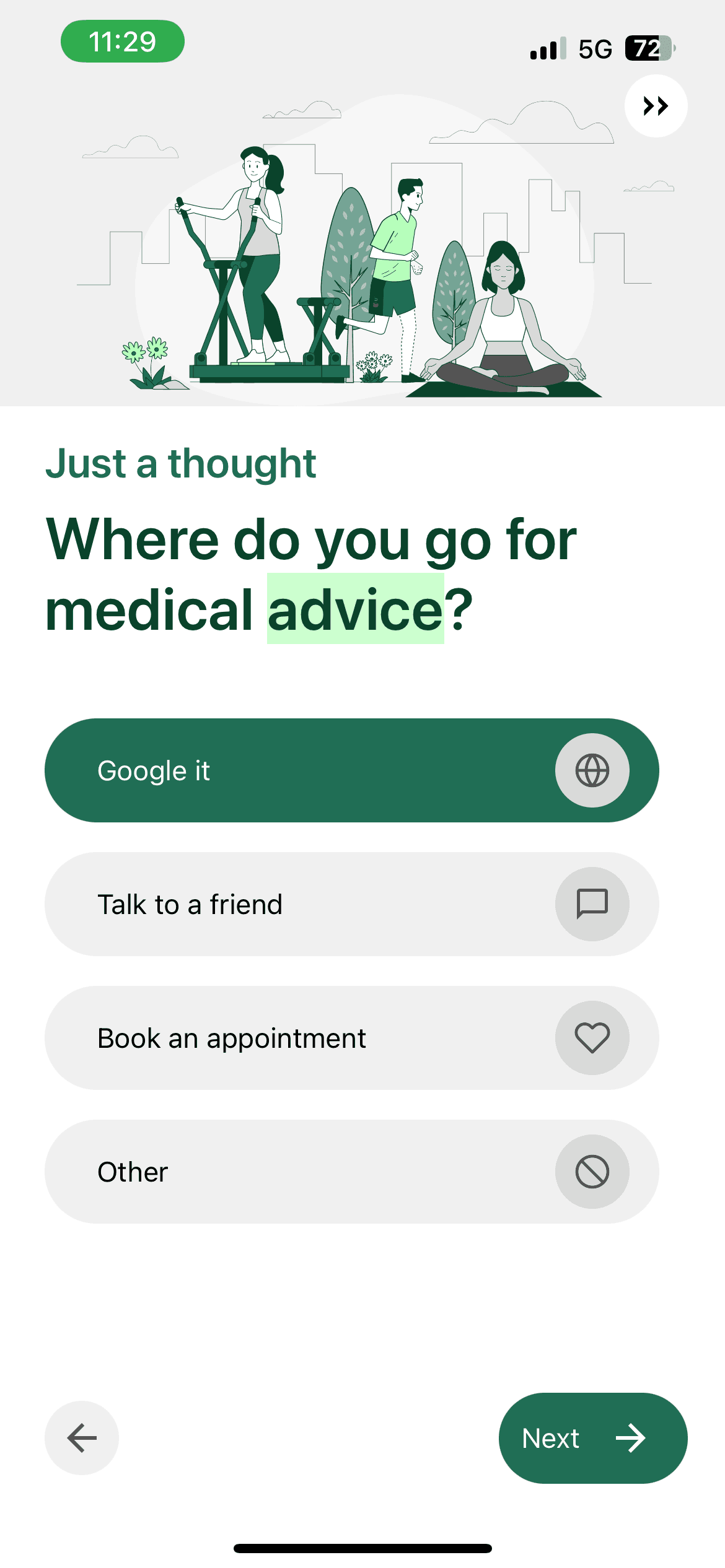
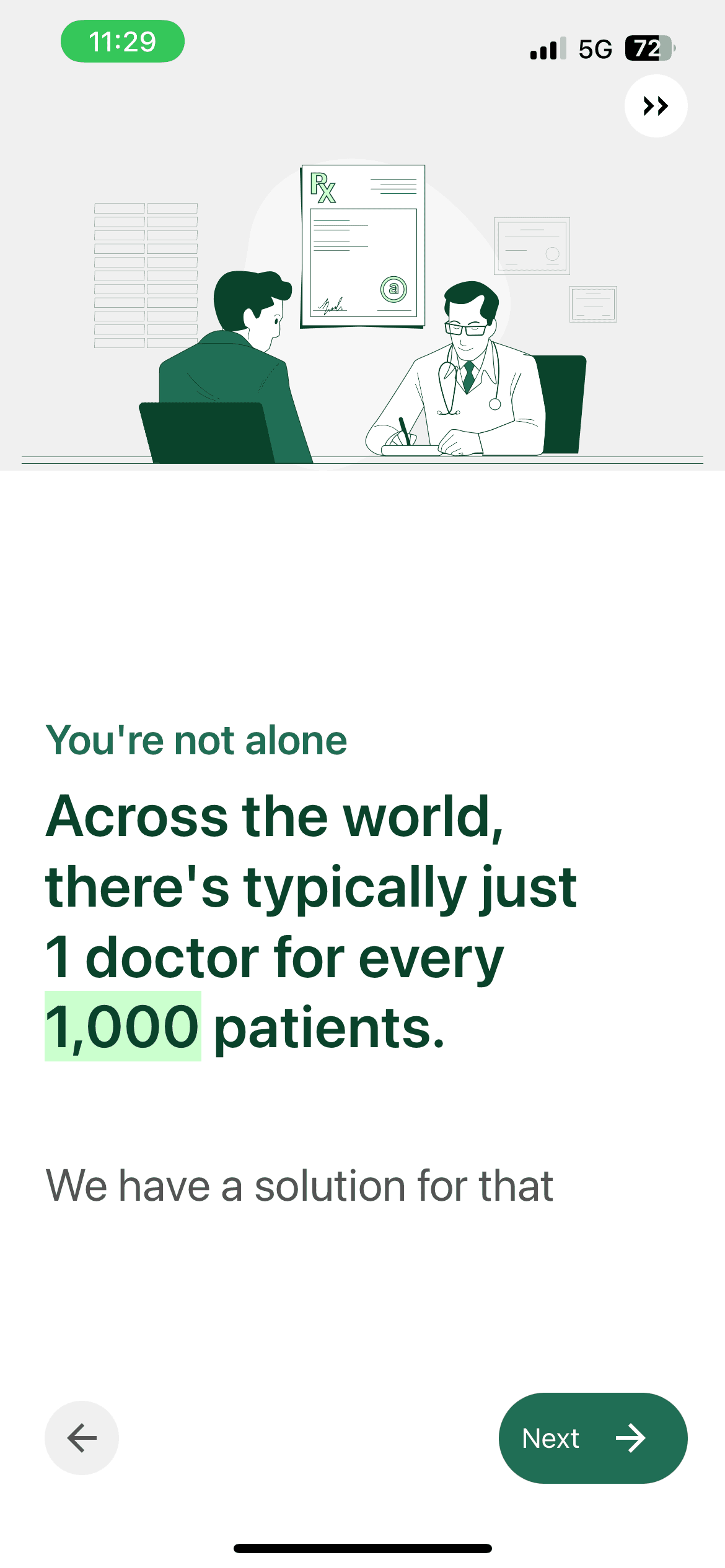
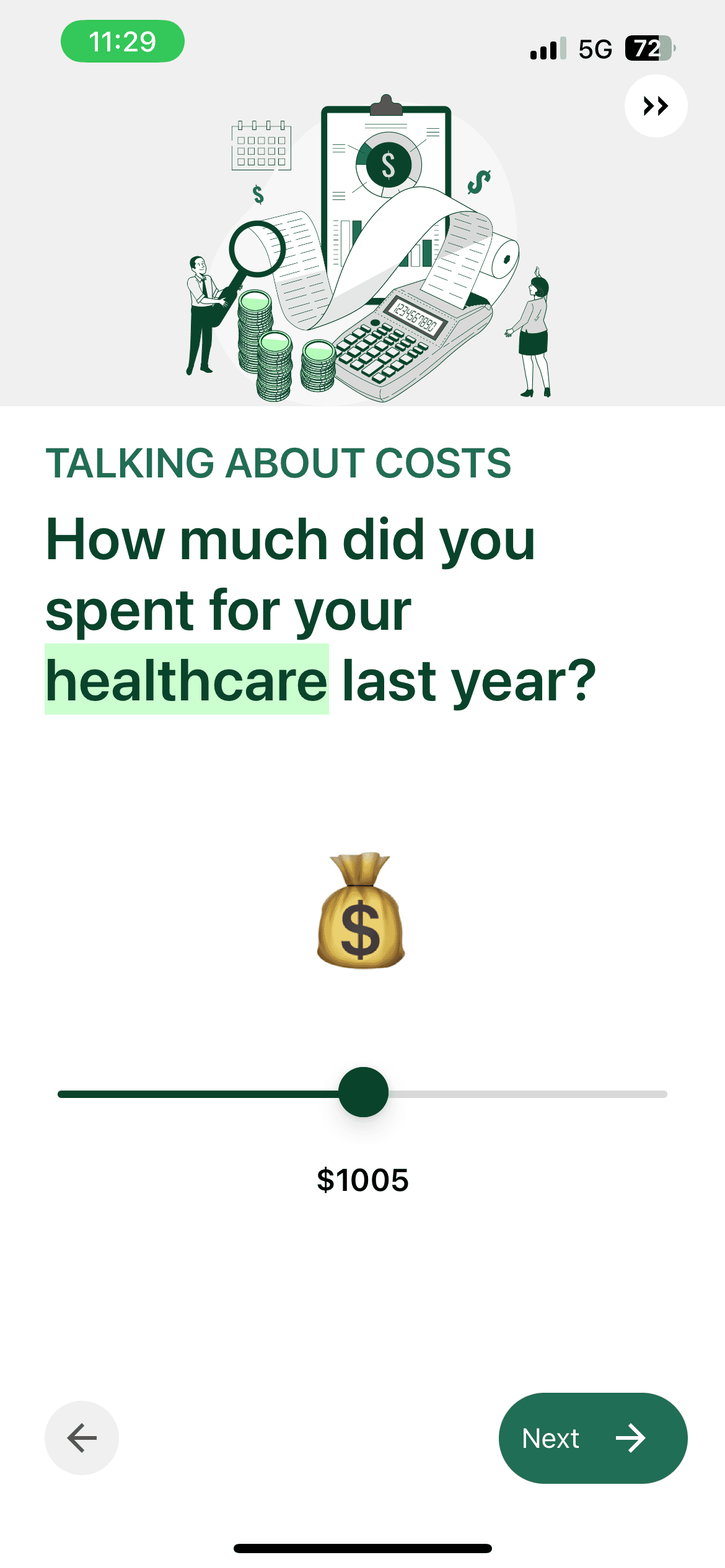
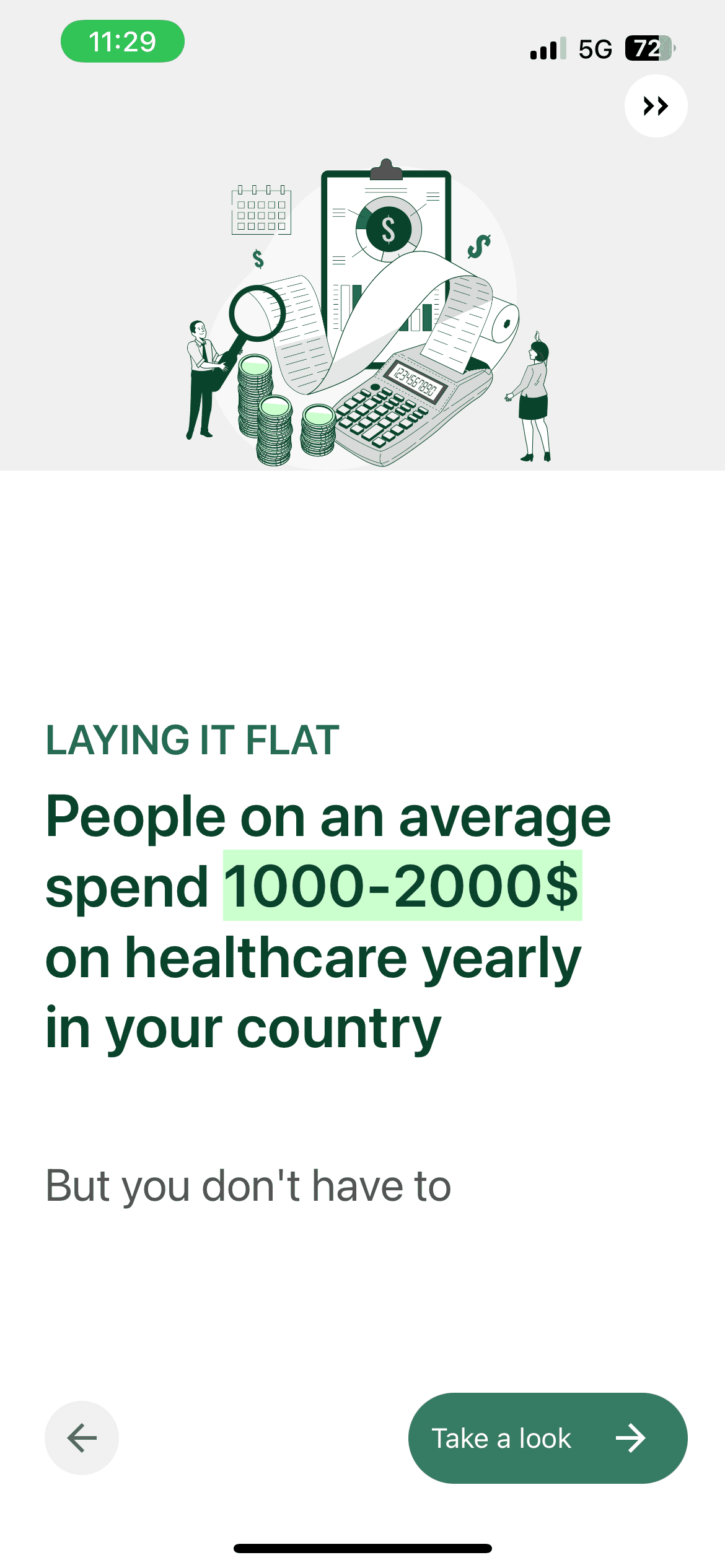
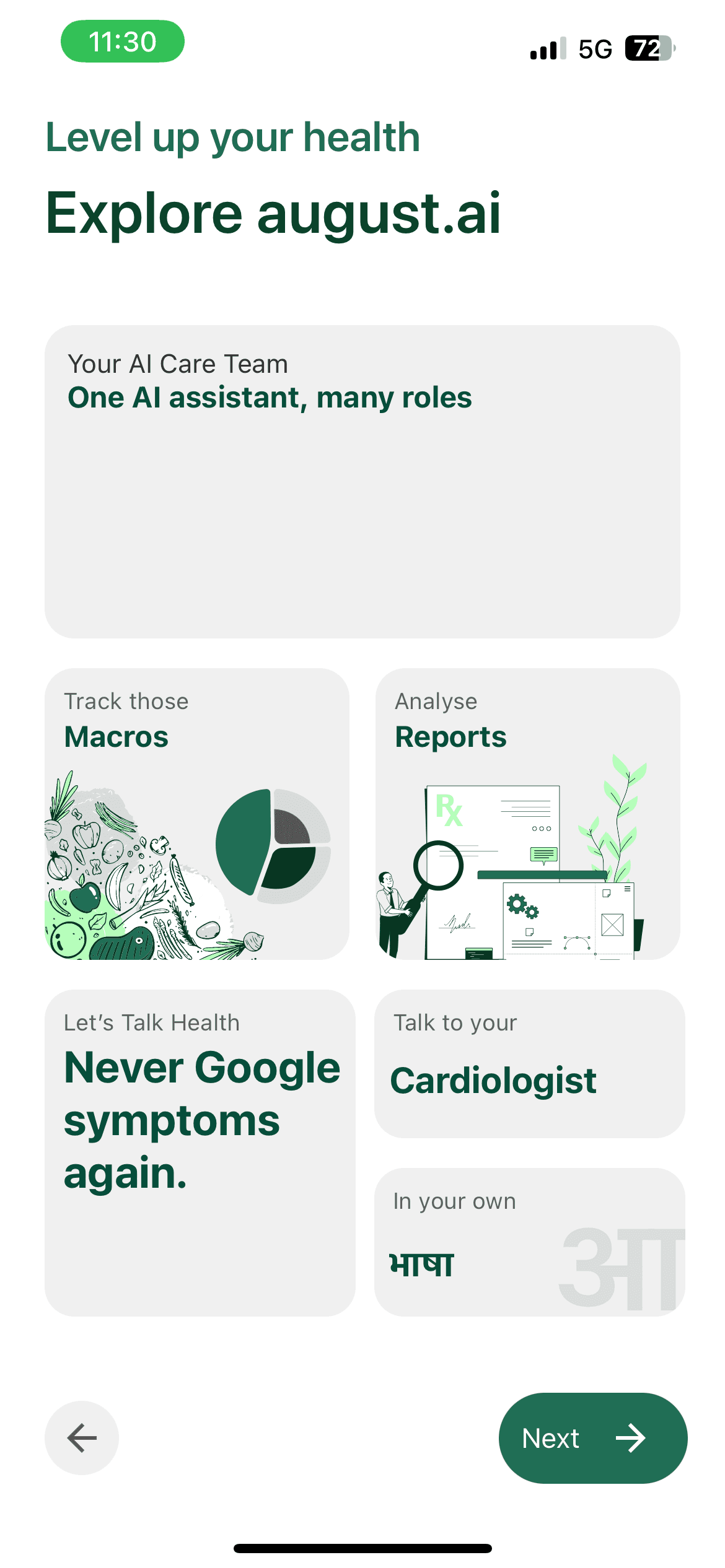
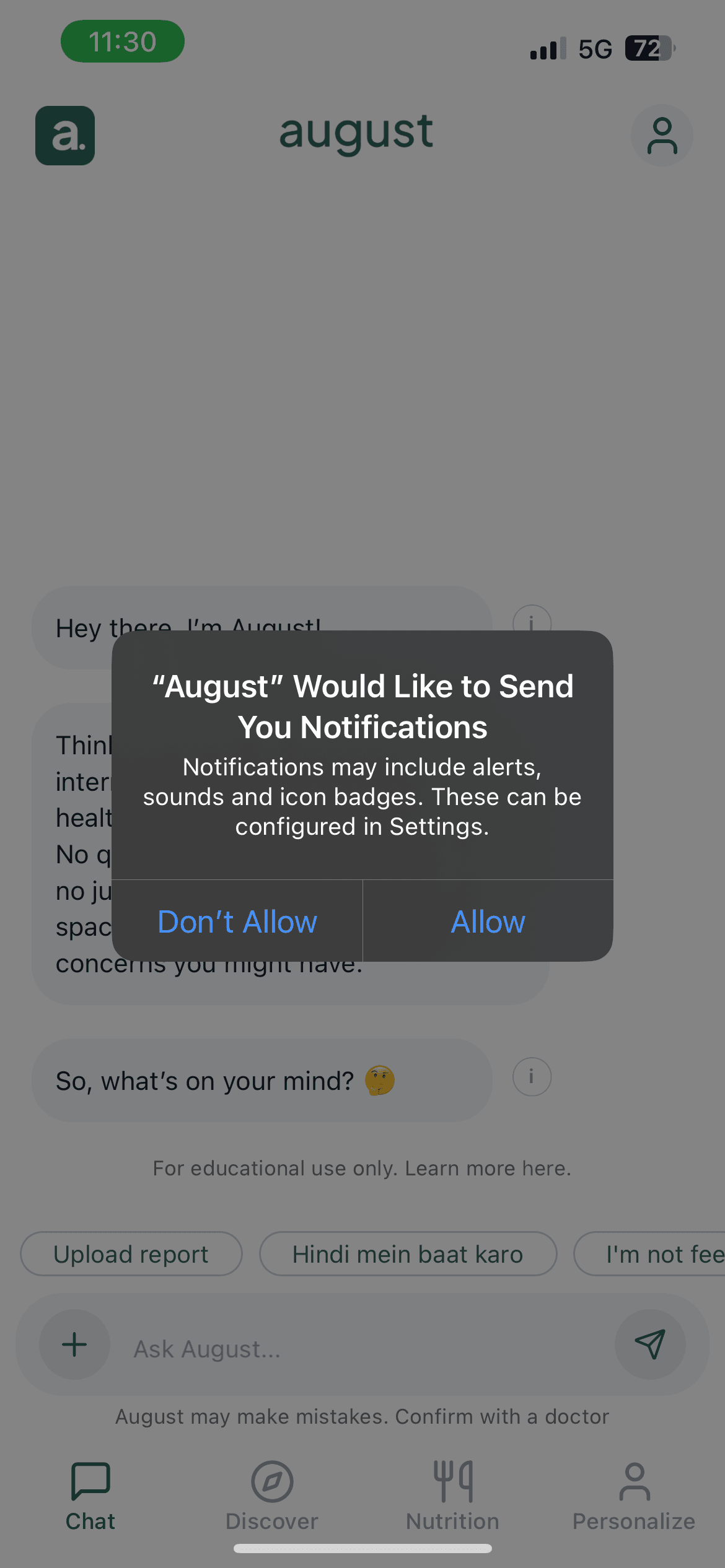
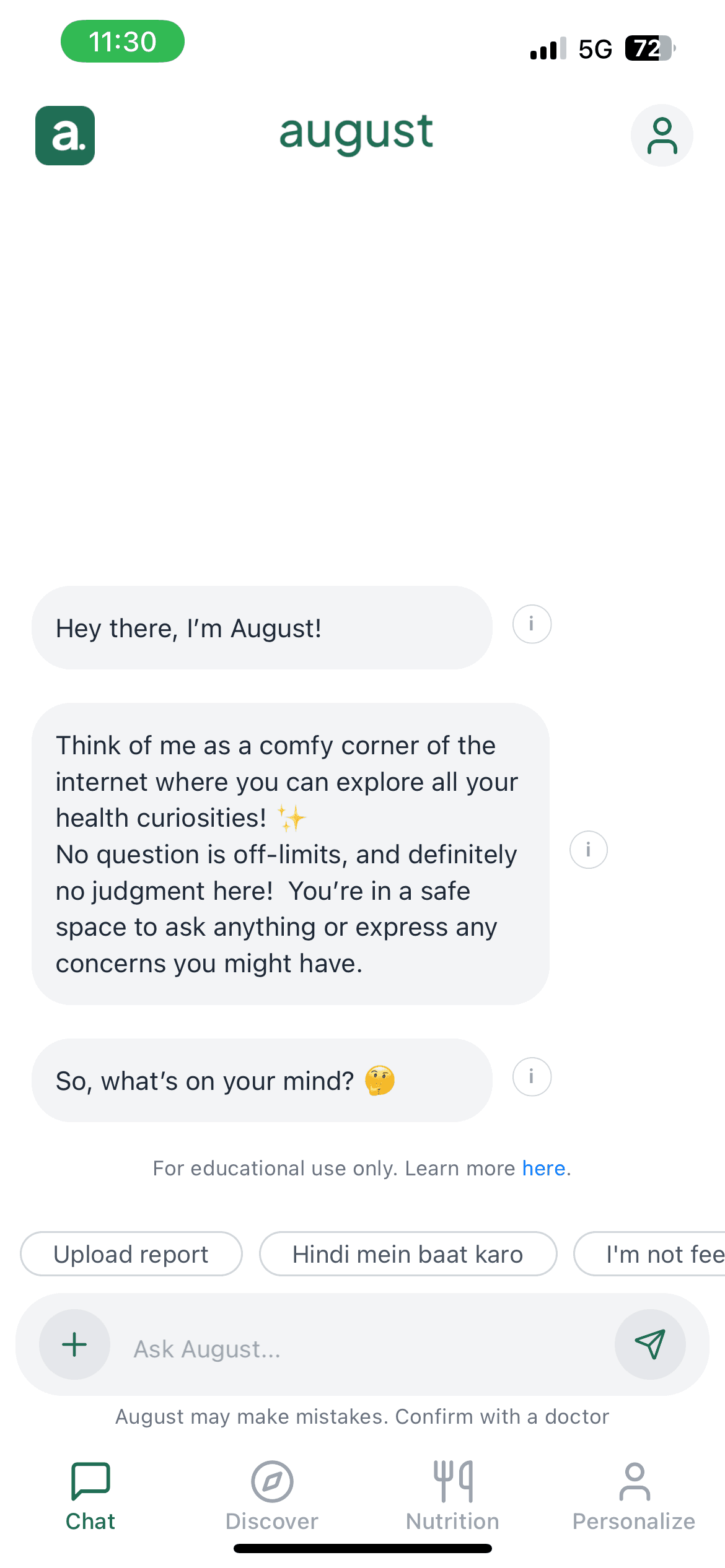
Kevin’s experience isn’t unique. My research uncovered these patterns again and again across users and industry data.
Research & Insights
To see how common Kevin’s experience really was, I looked beyond this single journey. I reviewed healthcare onboarding studies, analyzed flows from leading health apps, and broke down the onboarding flow step by step to spot where trust dropped and friction spiked.
Key Benchmark Insights:
Early requests for sensitive data (such as phone or health info) caused 42% of users to abandon onboarding.

When privacy assurances are buried or absent before data entry, 28% of users drop off.
Multiple or complicated choices at the start accounted for a 35% abandonment rate.
Lack of meaningful personalization contributed to 17% of losses, even small touches like using the user’s name matter.
Only 5% dropped off for reasons outside these main friction points.
WHAT THIS MEANS FOR AUGUST AI?
Users demand clarity, explaining why personal data is needed up front is essential.
Privacy promises & trust should be built before sensitive data entries.
Streamlining early choices and offering genuine, personalized touches (e.g., asking for and using the user’s name) directly addresses key sources of user stress.
Timely feedback & progress cues, like visual step indicators, help users feel in control and reduce abandonment.
DESIGN GOALS
Based on key friction points and user research, we have a clear actionable goals for the redesign-
Build trust before asking for data
Always let the user know their progress
Make health choices feel manageable, not overwhelming
Reduce cognitive load
To prioritize the redesign, I organized potential features by their impact on user experience and implementation effort.
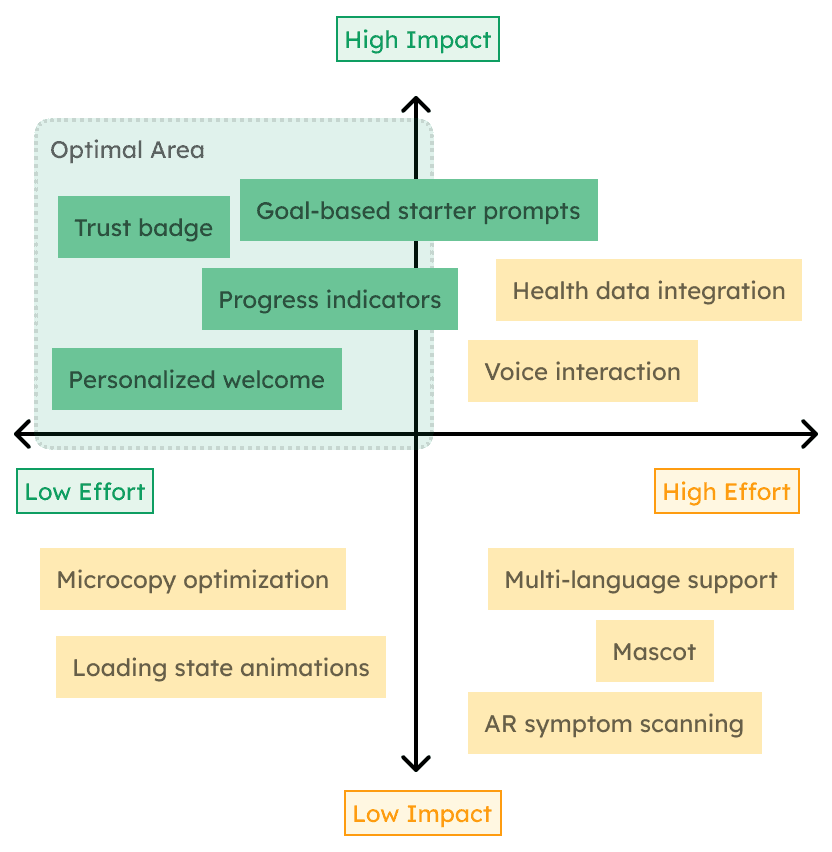
Impact/Effort Matrix based on the key findings and observations.
THE REDESIGN
Based on the design goals, I rebuilt August AI’s onboarding from scratch, focusing on the features from the optimal area as it delivers the highest value while having the lowest effort, not just by design wise but overall as a digital product.
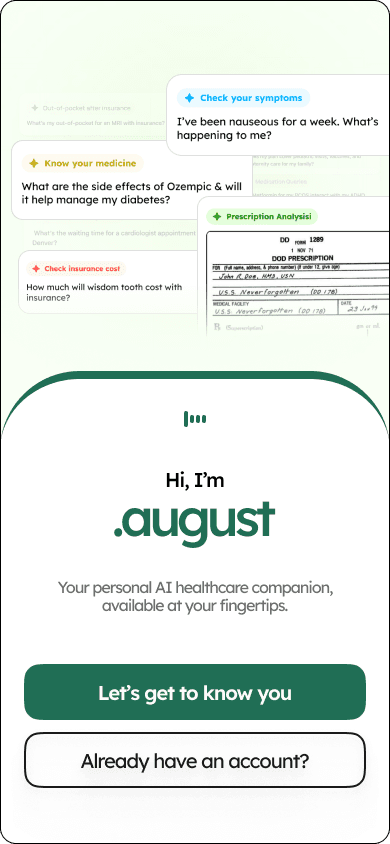
1. Clear view of what August can do-
The first screen now introduces August as a personal health companion and previews what Kevin can ask it (e.g., checking symptoms, understanding medications).
Effect: Users see value and safety before sharing data, instead of being hit with an OTP screen out of nowhere.
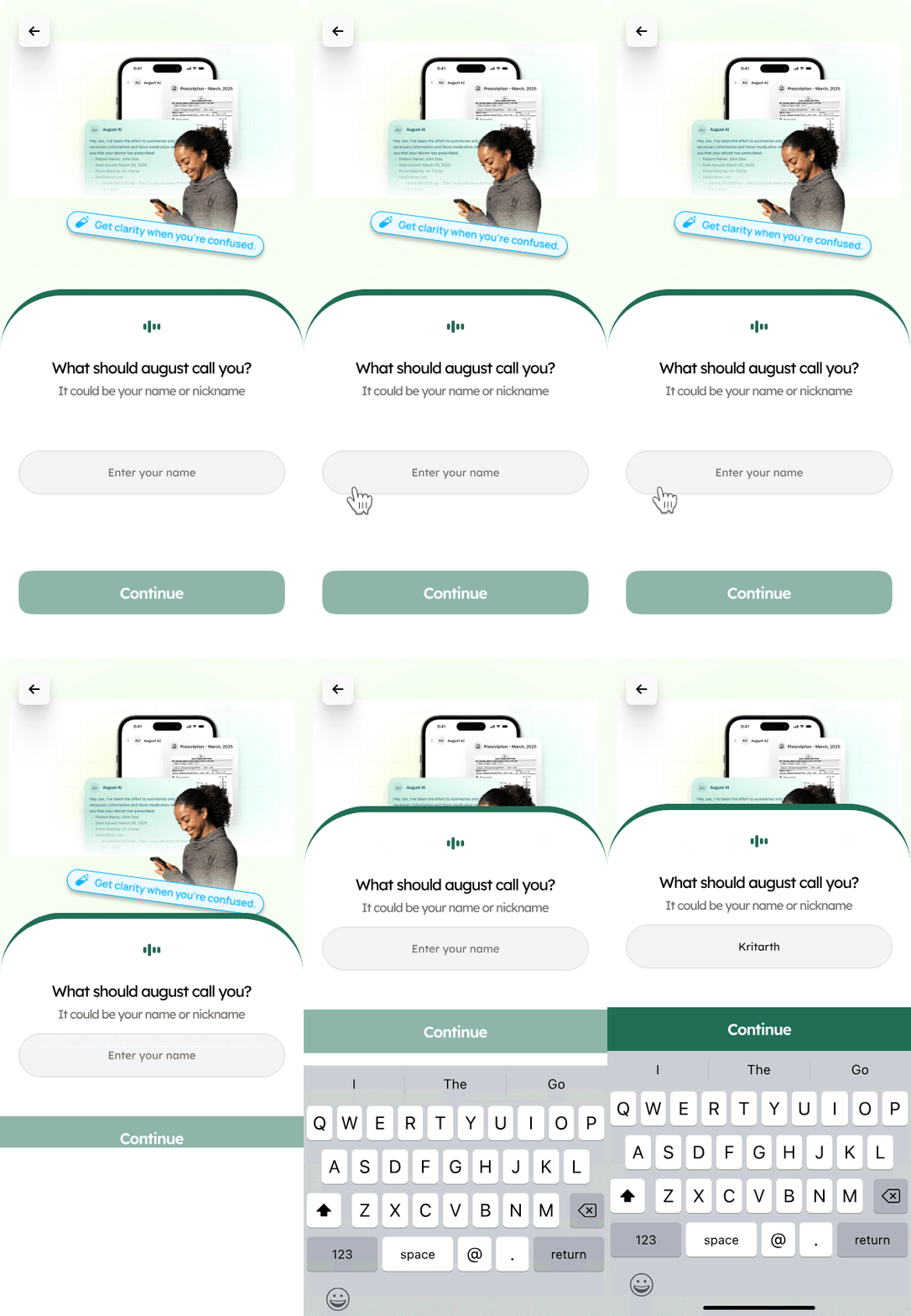
Progress transparency
Onboarding is broken into a small, predictable sequence of screens, each with a clear step making it obvious to users that they are moving forward and are close to being done.
Effect: Now users don't have to guess how many steps they have to take to complete the onboarding.
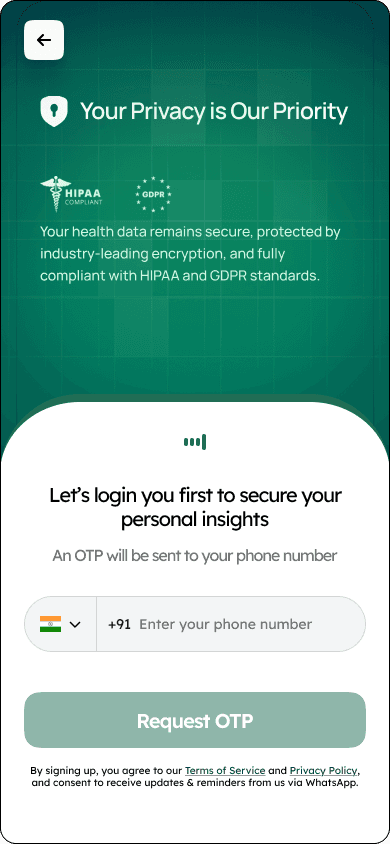
Trust badge before phone number
The “Your Privacy is Our Priority” screen now appears before Kevin is asked for his phone number.
It uses familiar cues (HIPAA / GDPR badges and a short reassurance) to explain how his data is protected and why login is needed.
Effect: In the original flow, users were asked for thier phone with little context, which amplified their anxiety about sharing health‑related information.
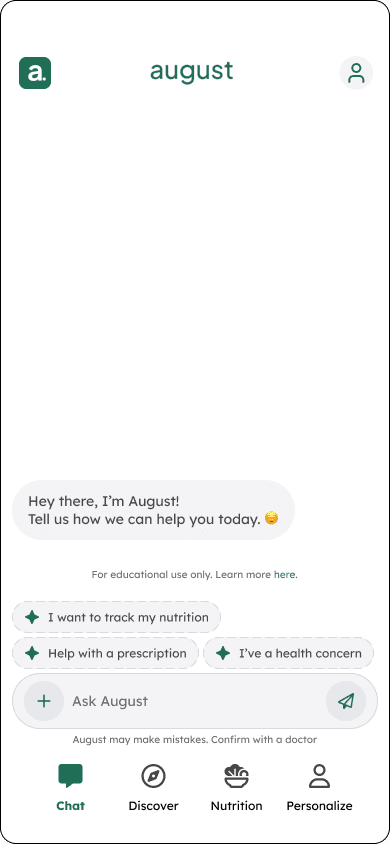
Less text, less congnitive load
We kept the chat intro short and easy to scan, instead of repeating a long paragraph after users had already built trust during onboarding.
Prompts like “Track nutrition” or “Help with a prescription”, tailored to what the user chose during onboarding helps user get started with less mental effort.
Effect: With less text and options that match the user’s goals from onboarding, the screen is easier to scan and navigate with less mental effort.
By focusing the redesign on the optimal area of the impact–effort matrix, August AI improves trust and clarity for first‑time users with minimal engineering effort.
THE FINAL PROTOTYPE
Reflection & Next Steps
What I’d Do Differently
Given more time or data, I would:
Test how important phone sign-up truly is:
Experiment with alternative sign-up methods like Google/Apple sign-in, or even let users start chatting immediately without an account, then prompt for sign-up later with a clear reward (e.g., one week of premium access, personalized health insights, or extended chat history).
Experiment with dynamic goal options:
Personalizing the choices based on time of day, user location, or how they found the app, to make the selection feel more relevant.
Co-design with medical professionals:
To ensure the tone and terminology align with clinical empathy, not just UX empathy.
Next Steps
This redesign sets a strong foundation, but there is always scope of improvement. Here’s what I'd do next:
A/B test the trust badge placement:
Does showing HIPAA earlier increase verification rates?
Introduce a “skip and explore” path:
Allowing users to enter the chat without any onboarding, for returning or hesitant users.
Build a symptom-specific onboarding variant:
Users coming with urgent concerns may need an even faster, more guided path.
Measure emotional outcome metrics:
Beyond completion rates, did users feel calmer, clearer, and more confident after onboarding?
Refernces
Healthcare onboarding & trust
Healthcare onboarding best practices and drop‑off behavior
https://uxcam.com/blog/10-apps-with-great-user-onboarding/Trust and transparency for health data and privacy cues
https://thisisglance.com/blog/healthcare-app-psychology-building-trust-through-designPatient onboarding and the importance of clear, digital entry points
https://referralmd.com/the-future-of-patient-onboarding-key-lessons-from-consumer-apps/
Cognitive load, Hick’s Law, and decision making
Hick’s Law and reducing options to speed decisions
https://blog.logrocket.com/ux-design/using-hicks-law-help-users-make-decisions/Complete guide to Hick’s Law in UX
https://www.uxness.in/2024/02/the-complete-guide-to-hicks-law-in-ux.htmlCognitive load in UI/UX design
https://www.aufaitux.com/blog/cognitive-load-theory-ui-design/